Ofisim Media is a creative agency offering web design, SEO and digital marketing services for your brand.
Ofisim Media is a creative agency offering web design, SEO and digital marketing services for your brand.
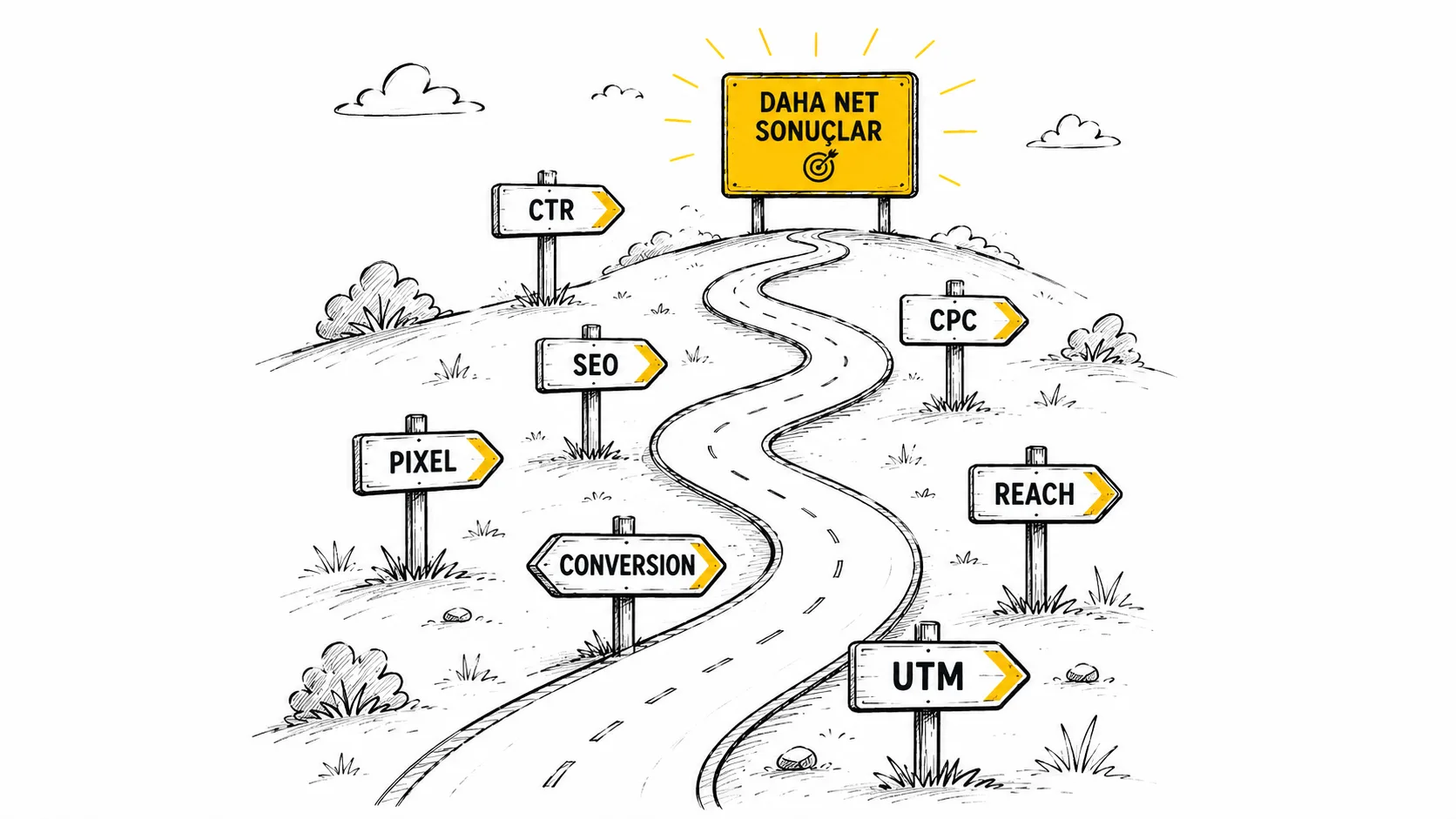
Some words in the digital marketing world may sound serious, technical or even a little confusing at first. CTR, CPC, CPM, pixel, conversion, remarketing, UTM, canonical URL… Don’t worry, they are not as scary as they look.
On this page, we explain commonly used terms in advertising, SEO, web, social media and measurement processes in a clear and simple way. The goal is to make reports, meetings and campaign screens feel a little less complicated.
CTR shows the percentage of people who clicked your ad after seeing it. It helps you understand how attractive your ad visual, headline and message are for your target audience.
CPC shows the average amount you pay for each click on your ad. It is an important metric for understanding how efficiently your advertising budget is being used.
CPM refers to the cost per thousand impressions. It is commonly used in campaigns focused on brand awareness and visibility.
An impression shows how many times your ad appeared on screen. If one person sees the ad multiple times, each view is counted separately.
Reach shows how many unique people your ad reached. Impressions count total views, while reach counts unique users.
A conversion happens when a user completes the intended action after interacting with an ad. Filling out a form, making a call, purchasing, requesting a quote or clicking WhatsApp can all be examples of conversions.
Frequency shows how many times, on average, a person has seen your ad. A very high frequency may indicate that the same users are seeing the ad too often.
ROAS measures the revenue generated compared to advertising spend. It is especially used in e-commerce and sales-focused campaigns to understand return on ad investment.
A meta title is the title of a page that appears in search engines. It helps users understand what the page is about and is an important field for SEO.
A meta description is the short text shown under the page title in search results. It summarizes the page content and can influence the user’s decision to click.
A canonical URL is a tag that tells search engines which page is the main version among similar or duplicate pages. It helps manage duplicate content in SEO.
A sitemap is a file that informs search engines about the important pages on a website. It helps Google understand the site structure and discover pages more easily.
Robots.txt is a file that tells search engine bots which parts of a website they can or cannot crawl. Proper configuration is important for indexing health.
A keyword is a word or phrase users type into search engines. The right keywords play an important role in content planning and page optimization.
A backlink is a link from another website to your website. Quality backlinks from trusted sources can be a positive signal for search engines.
Index means that a page has been included in a search engine’s database. If a page is not indexed, it may not appear in Google search results.
A landing page is a dedicated page designed to guide users toward a specific action. It is often used in ad campaigns for goals such as filling out a form, requesting a quote, purchasing or contacting the brand.
A CTA is a button or message that invites the user to take a specific action. Examples include “Request a Quote”, “Contact Us” or “Explore Now”.
UX refers to the overall experience a user has with a website or digital product. A page that is easy to understand, simple to navigate and guides users toward the right action is important for good UX.
UI is the visual interface design of a website or digital product. Buttons, menus, forms, colors, icons and page layout are all part of UI.
Responsive design allows a website to work properly on desktop, tablet and mobile screens. This helps users view the page comfortably across different devices.
Form conversion happens when a user completes the intended action by filling out a form on the website. Quote forms, contact forms or appointment forms are examples.
Page speed shows how quickly a web page loads. Fast-loading pages are important for user experience, SEO and conversion performance.
Core Web Vitals are key performance metrics used by Google to measure the user experience of web pages. They evaluate areas such as page speed, interaction and visual stability.


Engagement refers to the interactions users have with a social media post. Likes, comments, shares, saves and clicks are examples of engagement.
Reach shows how many unique users saw a piece of content. If the same user sees the content more than once, it does not increase reach.
A save happens when a user saves a post to view it again later. It is an important engagement signal, especially for informative, useful or inspiring content.
A share happens when a user sends or reposts content to others. It helps the content reach a wider audience and is a valuable metric for social media performance.
A Reel is a short vertical video format used on Instagram and similar platforms. It is often used for brand awareness, product promotion, event content and quick storytelling.
A Story is a temporary content format that usually remains visible for 24 hours on social media platforms. It is used for updates, instant sharing, event content and user interaction.
A carousel is a content format where multiple images or videos are presented in a single swipeable post. It is useful for informative content, product details and step-by-step explanations.
A hashtag is a label used to connect social media content with specific topics. When used correctly, it can help relevant audiences discover the content.
A pixel is a small tracking code added to a website to help monitor user behavior. It is used in ad campaigns for conversion tracking, remarketing and audience building.
Google Tag is a tag structure that helps track user actions on a website through Google tools. It is used in GA4, Google Ads and conversion measurement processes.
GA4 is Google Analytics’ current analytics platform. It is used to measure user behavior, traffic sources, events and conversions on websites and apps.
An event is a measurable action a user performs on a website. Button clicks, form submissions, video views, page scrolling or file downloads can be examples of events.
Conversion tracking is the process of measuring whether a user completed the intended action. It is used to track actions such as form submissions, purchases, phone clicks or WhatsApp redirects.
UTM refers to tracking parameters added to links. It helps analyze which campaign, channel, ad or content brought the user to the website.
A funnel shows the stages a user goes through from first contact with the brand to conversion. It is used to understand steps such as awareness, consideration and conversion.
Retargeting means showing ads again to users who previously visited your website or interacted with your brand. It is used to re-engage users who may be closer to the decision stage.